

It is not a mystery that thousands of years ago, ancient cultures around the globe had the ability to somehow move supermassive blocks of stone with extreme facility. (function(d, s, id) { if (d.getEl
It is not a mystery that thousands of years ago, ancient cultures around the globe had the ability to somehow move supermassive blocks of stone with extreme facility.
Despite lacking 'modern tools' to do so, it is a well-known historic fact that cultures had the ability to move rocks of up to 1,000 tons, and transport them from their quarries to their final resting places, in temples, pyramids, and other monuments.
And while we still can't figure out the how, we continue searching our planet discovering incredible ancient sites that are the ultimate proof that we still don't know everything about our ancestors.
In this article, I've gathered a number of images from different archaeological sites across the globe that show the sheer number of megaliths quarried and moved by mankind thousands of years ago.
In addition to the fact that they quarried and transported stones up to one thousand tons, the ancients were also very gifted designers and engineers.
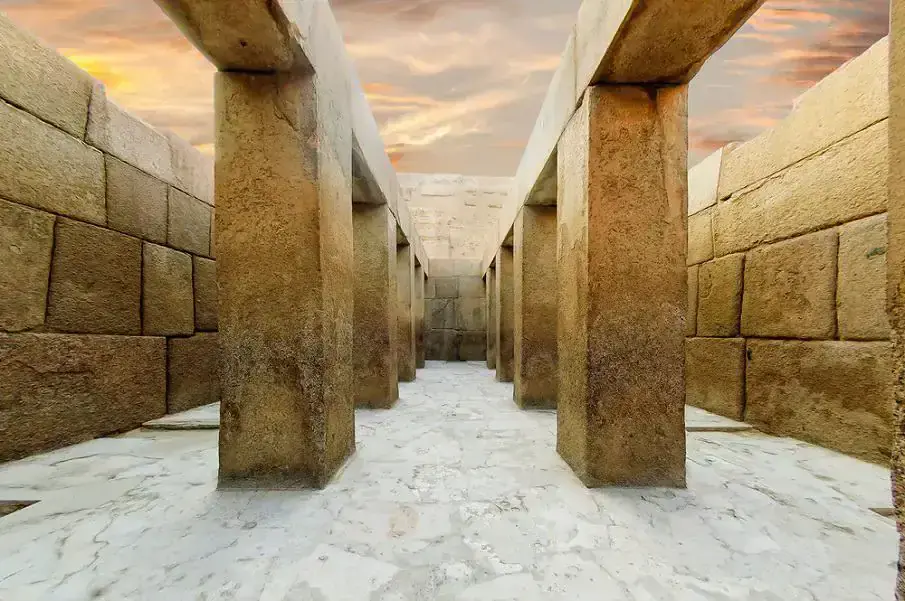
Some stones, like those found at the Khafre Valley Temple in Egypt, feature incredibly precise cuts and stones put together in such a way that every stone fits perfectly to the next one.
The most amazing thing perhaps is the fact that all of this was achieved without the use of mortar.
And curiously, if we compare the images of temples in Egypt to images of monuments in Bolivia or Peru; like Puma Punku, Sacsayhuaman, or even Ollantaytambo, we will notice an incredible similarity between the stones in South America and those in Africa.
It is almost as if these cultures used the same technique, the same technology, and the same principles thousands of years ago.
The only question that remains is, what were these techniques? What was the technology they used?
Where is it now? And why have we not found any evidence of it despite tedious archaeological work?
So, ask yourself after seeing these images; Did the ancients achieve all of this using sticks and stones?
Or, is there a slight possibility that we still have not figured out everything about ancient civilizations that lived on Earth thousands of years ago, and that somewhere out there the final piece of the puzzle remains to be found?
 The valley temple of Khafre, on the bottom of the causeway from the Sphinx to the Great Pyramid. Check out the massive stones and their perfectly-polished surface. Image Credit: Shutterstock
 These mesmerizing engineering skills have allowed the mortar-free facing to remain in position for thousands of years after the temple was built. How did they achieve this type of precision, thousands of years ago? Image Credit: Keith Payne.
 Khafre valley temple statue sockets. Image Credit: Wikimedia Commons
 The interior of the temple features stones that appear as if they were 'bent' by the builders. Image Credit: Keith Payne.
 Two composite images of the Valley Temple. Shutterstock
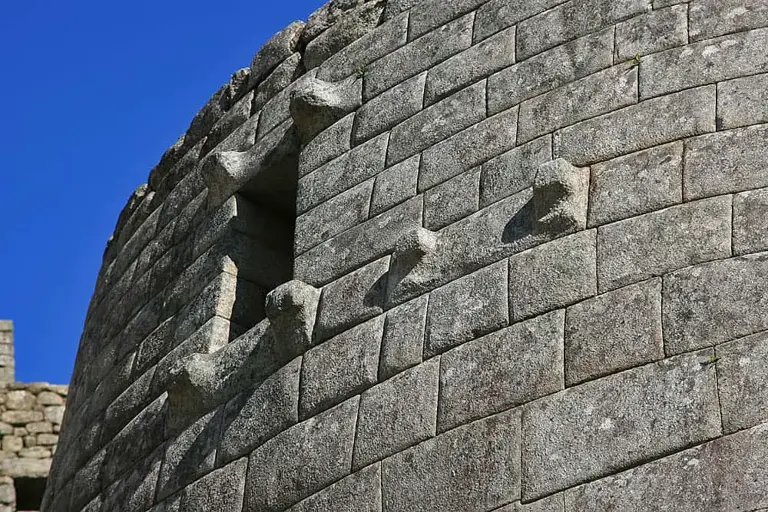 An image of the Temple of the Sun, Machu Picchu, Peru. Notice the incredible details of this structure. Again, not a single sheet of can fit in-between the rocks.
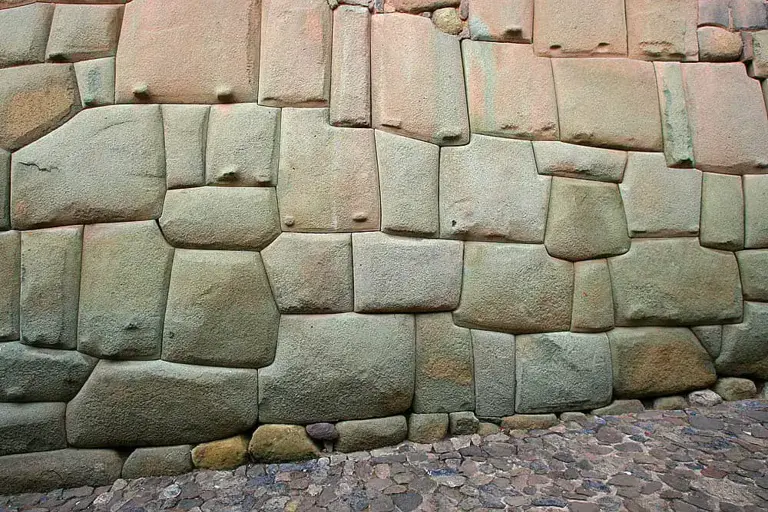 Incan stonework, Palace of Inca Roca, Cuzco, Peru. Another example of extreme precision. Not a single sheet of paper fits between the rocks. Some of them look as if they were 'fused' together.
 Features of the Coricancha Temple in Peru. Image Credit: Shutterstock
 A compilation of images from the Coricancha temple.
 Another incredible image of the Coricancha temple stones.
 Polygonal masonry Inca brick at Coricancha. Image Credit: Shutterstock
 The Stones at the Coricancha temple fit in perfectly like a Puzzle.
 How did the ancients achieve such precision? Image Credit: Shutterstock
 This stone at Puma Punku features details that almost seem as if they were created using laser tools.
 The Stones at Puma Punku are an incredible feat of ancient engineering.
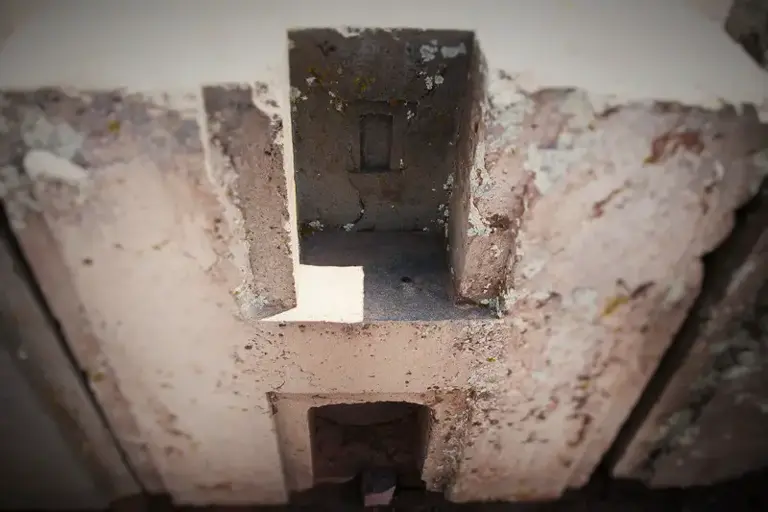 The famous H blocks at Puma Punku, Their purpose remains a mystery.
 Another perfectly-carved stone block at Puma Punku.
 The purpose of the stones at Puma Punku remains a mystery.
One of the H Blocks at Puma Punku.
 The stones at Ollantaytambo appeared to be glued together. They fit perfectly like a puzzle. Image by: Barry Everett
 Ancient Perfection. Image by: Barry Everett
 Stones at Ollantaytambo. Not only are the stones at Ollantaytambo, they appear to be fused. Image by: Barry Everett
 How did the ancients achieve this perfection? Image by: Barry Everett
 Puzzle stones. Not a single piece of paper fits between the stones, Image by Barry Everett
 How on Earth did the ancient builders achieve this type of perfection without the use of modern technology? Image by: Barry Everett
 Some of the stones feature mysterious 'knobs'. Image by: Eduardo Pi Peret Photography
 These are some of the largest stones at Ollantaytambo. Image by: Barry Everett
 How were these stones carved? Image by: marlandc.com
 Talk about PRECISION. Ollantaytambo.
 A closeup of the massive blocks of stone at Ollantaytambo. Image credit: Pinterest
 Image Credit: Woanderssein.com
 Another striking image of the stones at Ollantaytambo. Image by: Barry Everett
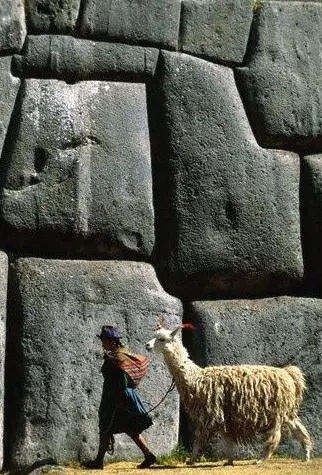 Stones at Sacsayhuaman.
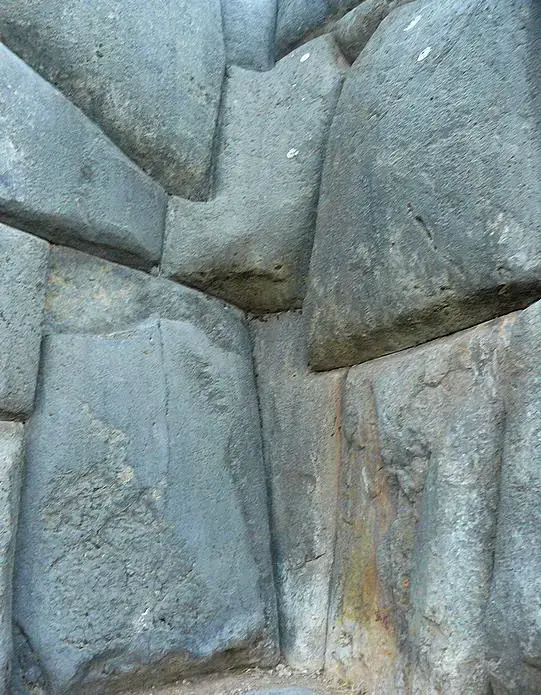 Incredible stones at Sacsayhuaman.
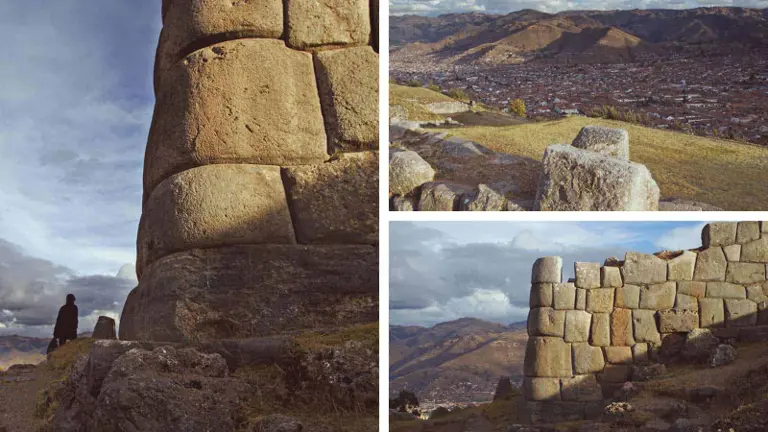 Sacsayhuaman: notice how well the ancients managed to place the structures. Such precision is incredible.
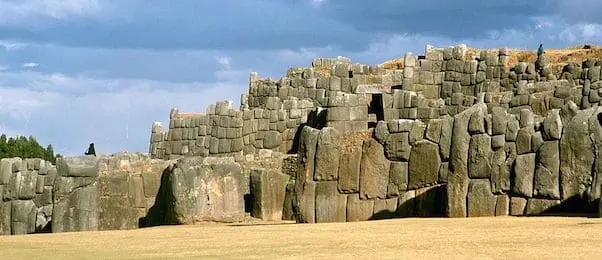 Walls of Sacsayhuaman
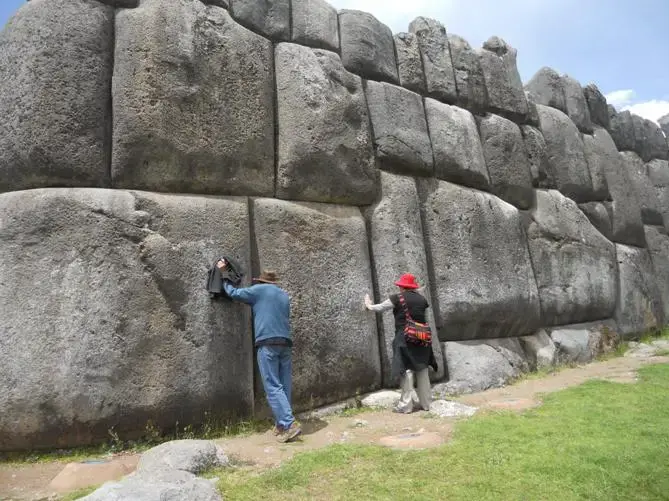 The construction of Sacsayhuamán remains a profound mystery for researchers who have failed to understand how ancient people managed to quarry, transport and place these megalithic stones.
 A perfect example of what we are trying to describe in this article. Image by Richard Cassaro.
 Another example by Richard Cassaro.
 Notice the similarity between the stones. Image Credit: Richard Cassaro.
 By rotating the image of Macchu Picchu we get a really nice feature. This is what the people in Cuzco call "the Inca´s face". Maybe everything was built, carved and placed in its current position for a specific reason.
 In this image, you can see the side panel from one of the Colossi of Memnon, the last remaining structures from the mortuary temple of Amenhotep III, known as Kom el-Hetan. The image was taken around 1900.
 An old image of the Ramesseum. Experts have calculated that the Ramesseum had an approximate weight of 1,000 tons.
 One of the best images of the 1200-ton block of stone at Baalbek.
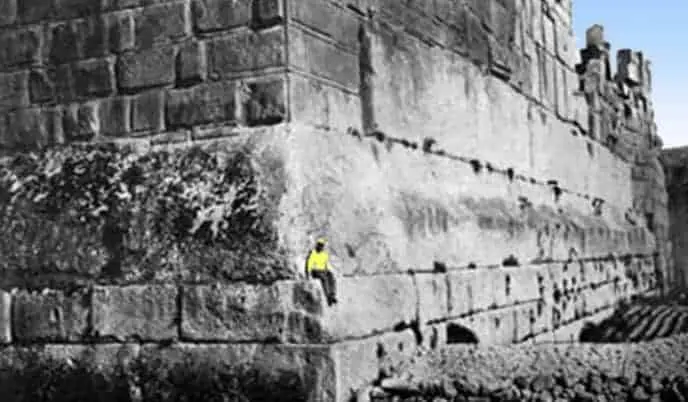 The Stones at Baalbek are monstrously large.
 An image of the massive Sarcophagi at the Serapeum of Saqqara.
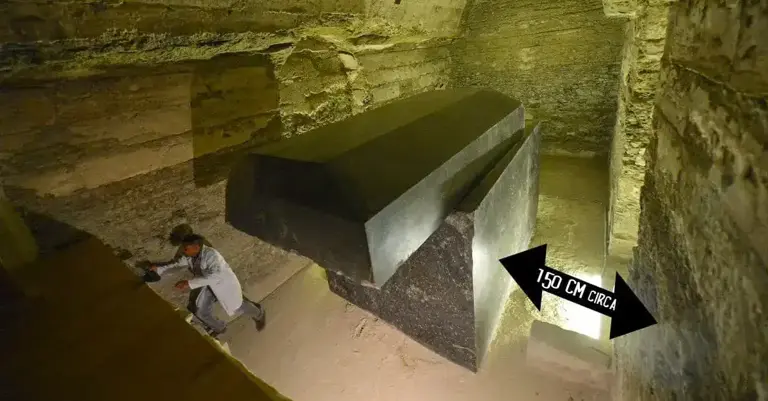 The Sarcophagi at the Serapeum of Saqqara.
 Smooth as glass stone boxes precisely cut weighing 100 tons, underground in the Serapeum, Saqqara
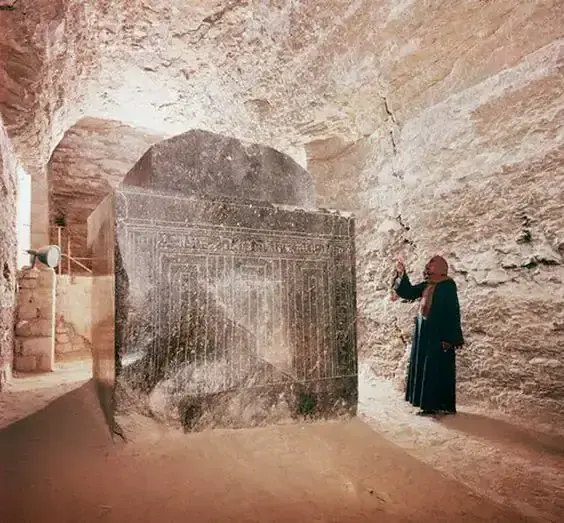 Not only are the sarcophagi massive, they are also perfectly polished.
 The Osirion Temple. Image Credit: Shutterstock
 Megalithic Sites
Ancient Engineering mysteries: How did Ancient Mankind move and cut megalithic blocks of stone?
The Western Stone, Jerusalem, Israel. 1.2 million pounds . The Ramesseum statue, Thebes, Egypt. Two million pounds . The Trilithon at the Temple of Jupiter, Baalbek, Lebanon. 4.8 million pounds . So b
 Megalithic Sites
Mustatils in Saudi Arabia: Gates for Animal Sacrifice to Unknown Gods?
Over a thousand "mustatils," ancient rock formations in Saudi Arabia, are now the earliest ritual landscape structures ever identified. Researchers date them around 7,000 years old. Thus, they may be
 Megalithic Sites
Prehistoric monoliths found in central France for the first time
YouTube Video Here: https://www.youtube.com/embed/_DPc6_ARWU0?feature=oembed&enablejsapi=1 Archaeologists in France have uncovered rare monolith stones for the first time in the central part of th