
Just as there are those who still believe the Earth is flat, there are those who refuse to acknowledge that climate change is real and that it will harm our modern society. But a new study of ancient
Just as there are those who still believe the Earth is flat, there are those who refuse to acknowledge that climate change is real and that it will harm our modern society. But a new study of ancient climate change offers even more proof that we had better prepare for negative effects.
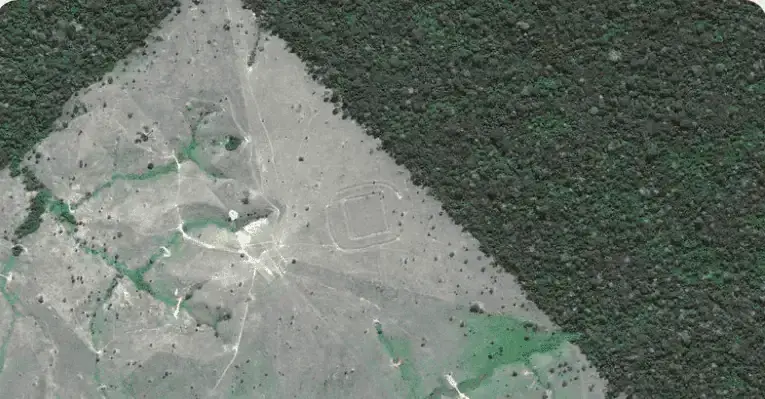
A team of scientists from around the globe participated in a study of Amazonian peoples who lived at the time of the Medieval Climate Anomaly, which occurred from about AD 900 to 1250, and the Little Ice Age, 1450-1850.
The Medieval Climate Anomaly saw a period of warming similar to that of the 20th and 21st centuries, only warming today is much worse and caused by humans. Scientists have offered several theories as to why this past warming occurred, but they all agree that it happened and it certainly made an impact on many different cultures.
The Little Ice Age, on the other hand, was a long period of global cooling that was caused by volcanic eruptions such as Krakatoa in the 13th and 15th centuries.
Both of these periods of global climate change caused mass migrations, disrupted food production and resulted in natural disasters that made some cultures disappear.
"Were we getting a window into that in prehistoric Amazonia? I think so," University of Utah professor Mitchell Power said. "So it's kind of a one-two punch: if the climate doesn't get you, it might be the thousands of bodies that show up that you have to feed because extreme drought forced them out of their homelands."
According to Science Daily:
The report details migrations and conflict that took place potentially in response to extreme changes in climate. It notes that the demise of mound centers in the Guianas coast around the year 1300 CE, for example, could have occurred because of a prolonged drought that the researchers documented -- or the expansion of a culture called the Koriabo "could have been responsible for conflicts leading to the ... demise, or at least accelerating a process triggered by climate change.""The flexibility, or lack thereof, of these systems explains the decline of some Amazonian societies and not others ..." the report says. Societies that collapsed were at the end of periods of growth, accumulation, restructuring and renewal. "Those societies had accumulated rigidities, and were less able to absorb unforeseen disturbances resulting in dramatic transformation."
https://twitter.com/RPearshouse/status/1140913948759343104
We are seeing the same kind of migrations today due to conflict and climate change, particularly from the Middle East and Africa to Europe and from South and Central America to the United States. As more places become unlivable, migrations will only increase as people seek survival for themselves and their children. Ancient peoples sought the same thing and some cultures were unprepared for the influx of refugees.
Climate change had already put a strain on some cultures. The sudden population boost exacerbated the problem.
Others were more prepared because they had more diverse food supplies that included growing it themselves and gathering it from natural sources.
As our own society relies more and more on agriculture, we are wiping out forests that provide natural sources of food, medicine, and timber that would come in handy during difficult times.
Our world is so interconnected today, however, that it won't just be a few scattered peoples who suffer, it will be everyone.
"I believe the most important aspect of the research is showing how societies respond differently to climate change depending on several factors like the size of their population, their political organization, and their economy," lead author of the study, Jonas Gregorio de Souza of the Universitat Pompeu Fabra, Barcelona, Spain said. "We started the research expecting that climate change would have had an impact everywhere in the Amazon, but we realized that some communities were more vulnerable than others. To summarize one of the main ideas of the paper, those pre-Columbian peoples that depended heavily on intense and specialized forms of land use ended up being less capable of adapting to climatic events."
https://twitter.com/NatureEcoEvo/status/1140998134274953216
Again, we also rely heavily on specialized land use today on a more global scale than ever before, which makes the whole planet vulnerable. And we're either smart enough to learn from the past and do something to prevent ourselves from suffering the same fate, or we are doomed. It's that simple.
"Together, we have a better understanding of the long term changes in climate and human activity," S. Yoshi Maezumi of the University of the West Indies said. "These long-term perspectives on how people responded to past climate variability, including droughts and increased fire activity may help provide insights into human adaptation and vulnerability to modern anthropogenic climate change."
Scientists overwhelmingly agree that climate change is real and that humans are the cause this time around. Lessons of climate change in the past give us a glimpse into how bad it can be. But, again, the society we have built on this round blue speck in the universe is far too dependent on agriculture and does not manage other resources well at all. It's all a profit-driven enterprise that is systematically raping the land, and once everything is gone, it's gone. We are capable of preventing many of the disastrous effects of climate change. We just have to learn from the peoples of the past and listen to scientists.
https://twitter.com/wef/status/1140967400592027649
Featured Image: Wikimedia
 Earth Mysteries
The real World War I: 13,000 years ago
History had it all working apparently... the first world war happened thousands of years ago according to researchers who have found evidence of the first major military conflict at Jebel Sahaba.At a
 Earth Mysteries
30 Images That Prove The End Is Near
Because sometimes we, as a society need help to realize what exactly is going on around us, and how things have changed, and not for the better, here are 30 images that prove the end is near. Take a l
 Earth Mysteries
Mankind Survived A 'Civilization Changing' Extraterrestrial Impact 12,800 Years Ago
In a massive study that included 24 researchers and published in two scientific papers, experts found that our planet suffered the impact of a space object as early as 12,800 years ago when humans wer