

Our ancestors were fully aware of the different senses of the human body and used them accordingly. Modern society appears to have forgotten it, as we hold on to the belief we only have five senses: s
Our ancestors were fully aware of the different senses of the human body and used them accordingly. Modern society appears to have forgotten it, as we hold on to the belief we only have five senses: sight, smell, taste, touch, and hearing.
Far from what is popularly believed, the human senses are more than just five. In addition to sight, smell, taste, touch, and hearing, our body has many other senses that have been cast in the shadows as mainstream society evolves.
In this article, we bring you ten extra senses that you probably did not know about.
These ten senses were widely used and recognized by ancient cultures around the globe, but have become depopularized throughout the years as modern society becomes 'colder,' and hence senseless due to numerous different reasons. We have forgotten the immense capabilities of our body, and have become less connected to our surroundings, mostly because many of us have become distant from our environment, distant from our senses.
Maybe its time to start following the ancient way of life, and become more in touch with the different senses that our body has, but we decide to ignore.
 Our ancestors were fully aware of the different senses of the human body and used them accordingly. Modern society appears to have forgotten it, as we hold on to the belief we only have five senses: sight, smell, taste, touch, and hearing.
Chemoreceptors: they are related to the detection of hormones and drugs. They can also regulate the vomiting reflex. They are sensory extensions of the peripheral nervous system into blood vessels.
Stretch receptors: located in the primary organs, they allow the detection of dilation of the blood vessels. They are related to headaches. Stretch receptors are neurologically linked to the medulla in the brain stem via afferent nerve fibers. Curiously, they monitor blood pressure and have the ability to stimulate the release of antidiuretic hormone (ADH) from the posterior pituitary gland.
Equilibrioception or sense of balance. This sense, located inside the ears, allows humans to maintain the balance and to make the necessary changes so that the body is kept in balance during movement. Balance is the result of a number of body systems working together: the eyes (visual system), ears (vestibular system) and the body's sense of where it is in space (proprioception) ideally need to be intact.
Nociception: is responsible for the perception of pain. It consists of three types of receptors: somatic (bones and joints), cutaneous (skin) and visceral (internal organs). As noted by experts, nociceptors have a certain threshold; that is, they require a minimum intensity of stimulation before they trigger a signal.
Hunger: thanks to this sense the body identifies the need to feed. However in today’s world, even though we feel hunger we are found living in such a rapid environment where many of us ignore that sense. Furthermore, there are those who eat even when full, ignoring once gain this sense. Here we can also include thirst, which more or less allows your body to monitor its hydration level so you know when you need to hydrate.
Tension Sensors: they are located in the muscles and allow the brain to regulate the intensity of the muscular tension.
Propioception: This map of sensitive receptors allows the body to know the spatial location of each of its parts. Propioception is distinguished from exteroception, by which one perceives the outside world, and interoception, by which one perceives pain, hunger, etc.
Sound/Hearing: this sense detects sound vibrations housed in different media, such as in air or water. Lately ,our society doesn't hear or listen, and we rarely time to listen to silence, something widely practices by different cultures around the globe.
Thermoception. is responsible for both detecting the temperature of the outside environment and regulating the temperature of the body itself. The details of how temperature receptors work are still being investigated.
Itching: independent of the touch, it is the sense that captures and sends the sensation of pruritus to the brain. According to brainfacts, itching could be a flavor of the many sensations communicated by other sensory neurons.
 Mythology & Ancient Knowledge
The Origin Of The Number Zero
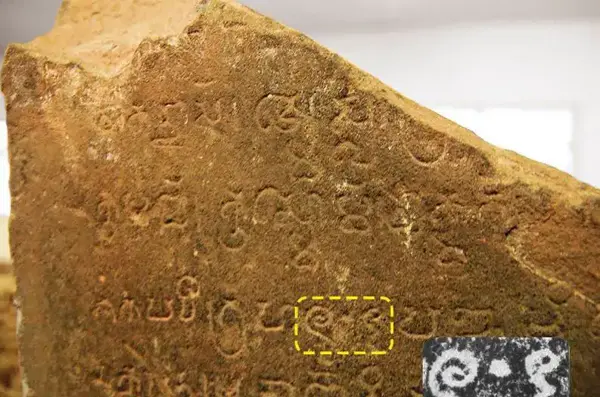
[caption id="attachment_8489" align="aligncenter" width="800"] This inscription, written in Old Khmer, reads “The Caka era reached year 605 on the fifth day of the waning moon.” The dot (at right) is
 Mythology & Ancient Knowledge
Sacred Geometry And The Flower Of Life
[caption id="attachment_8221" align="aligncenter" width="640"] The Flower of Life symbol drawn in red ochre Temple of Osiris at Abydos, Egypt. Photograph taken by Ray Flowers[/caption] The Flower of l
 Mythology & Ancient Knowledge
Ancient Knowledge? The Secret Importance Behind The Number 3
Throughout human history, the number three has always had a unique significance, but why? If we look back in history at ancient mankind, no matter which culture we observe the number three has always