

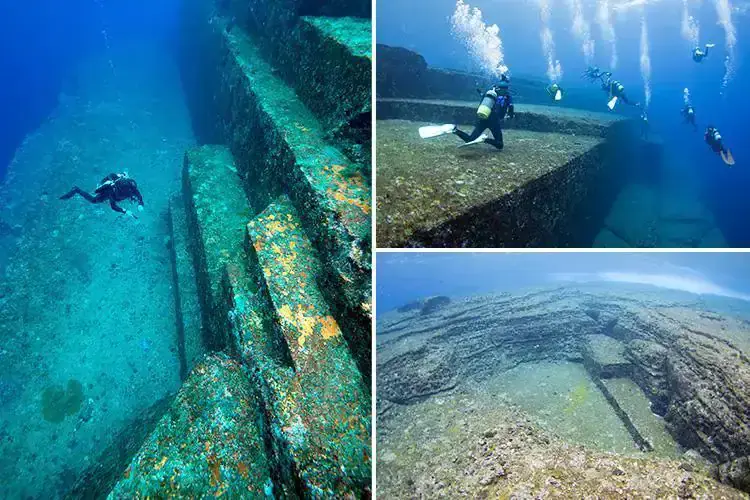
Experts like Professor Masaaki Kimura, from the University of the Ryukyu, believe these 'structures' date back to 8,000 BC. Kimura suggests that these are monuments are made by man and that they
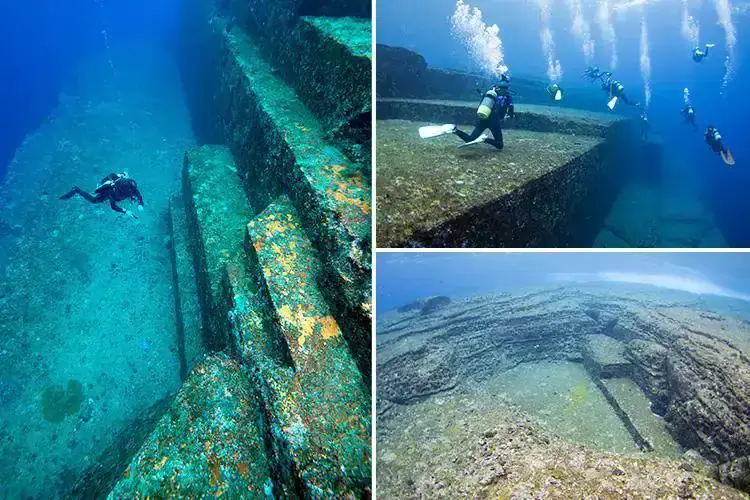
Experts like Professor Masaaki Kimura, from the University of the Ryukyu, believe these 'structures' date back to 8,000 BC. Kimura suggests that these are monuments are made by man and that they are proof of an ancient civilization that vanished beneath the ocean.
It is true when they say that there are countless enigmas at the bottom of the sea. Proof of this are the mind-boggling underwater structures known as Japan's Atlantis. Ever since their discovery, these fascinating ruins—with features that hint they were carved— have confused experts. No one is quite sure as to who created them—some scientists say they are natural formation—or how old they are.
All manner of theories have been used to get to the bottom of the underwater complex of Yonguni. No one is quite sure how these massive slabs got there and theories range from ancient civilizations, aliens, and natural formations. Some researchers and historians believe that the structures at Yonaguni could be the ancient remains of Mu, a fabled Pacific civilization rumored to have vanished beneath the Ocean.
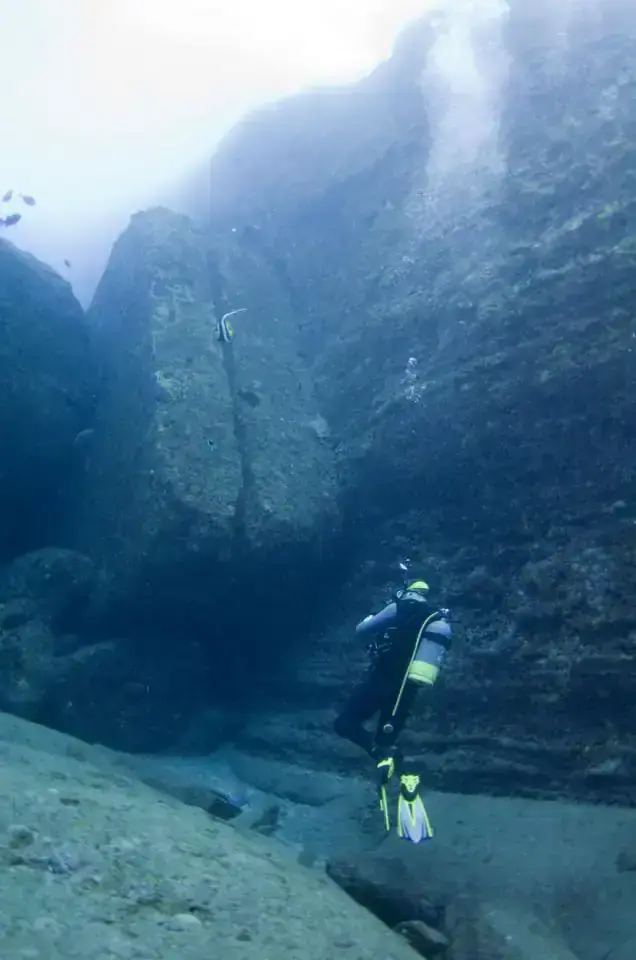
The ruins were discovered by Dive Tour operator Kihachiro Aratake.
The main “monument” at the underwater complex of Yonaguni consists of medium to very fine sandstone and mudstone blocks that belong to the Lower Miocene Yaeyama Group which researchers believe were deposited about 20 million years ago.
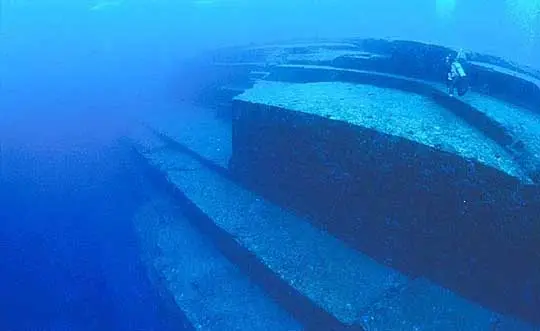
Natural formation?
The mains reason why some archeologists and geologists remain skeptical about the underwater complex is due to the fact that most of the underwater formations at Yonaguni are connected to the underlying mass, which is why they suggest it’s a rather unusual natural formation.
But there’s got to be more to that than nature right?
What makes the underwater ruins of Yonaguni stand out?
According to many divers and researchers, one of the best examples found at the underwater complex are the staircase-like terraces and the amazing flat sides with extremely sharp corners, something that according to many cannot be overlooked and considered as a natural formation.
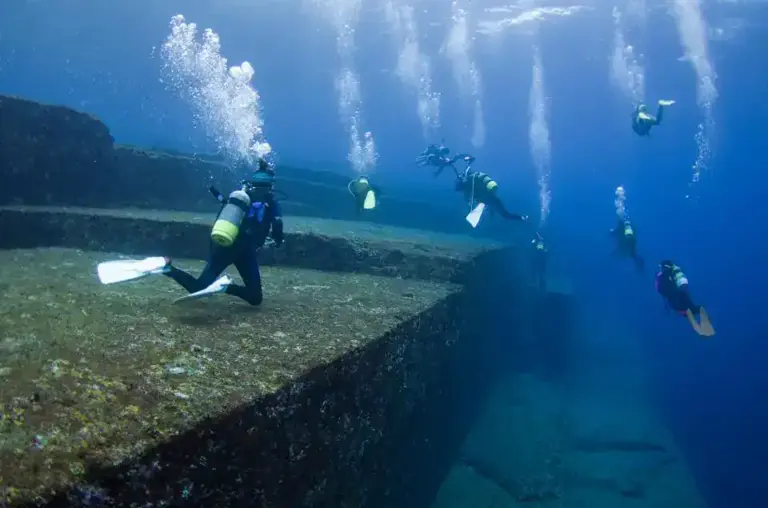
Prof. Masaaki Kimura, a marine geologist at the University of the Ryukyus in Okinawa has spent several years studying the Yonaguni monument. Kimura suggests that these are monuments are made by man and that they are proof of an ancient civilization that vanished beneath the ocean.
There are experts who propose a mixed theory. They say that these rocks formed naturally on the site, but were modified—at one point in history—by an ancient civilization.
Talking about the underwater structures, Boston University geologist Robert Schoch said that the layers of the monument are extremely well-defined, and are most likely the result of Yonaguni lying in an earthquake-prone region.
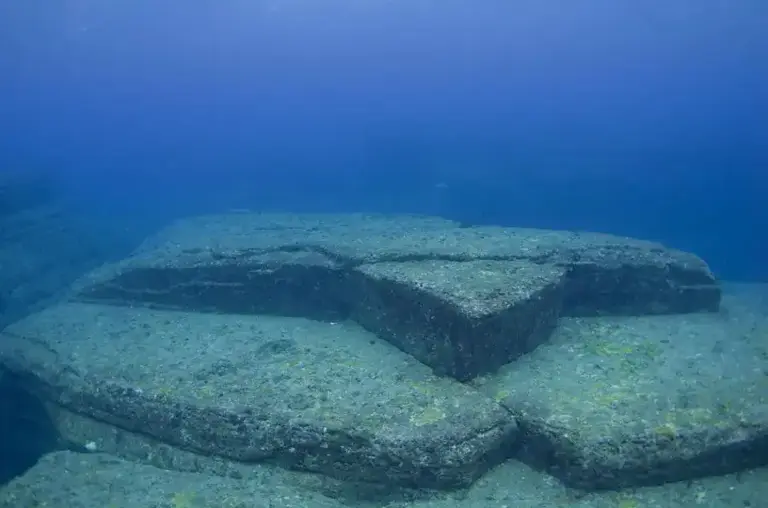
The rocks of this group are also crisscrossed by numerous sets of parallel, vertically oriented joints in the rock.
"These joints are natural, parallel fractures by which the rectangular formations seen in the monument likely formed."
"Yonaguni lies in an earthquake-prone region; such earthquakes tend to fracture the rocks in a regular manner."
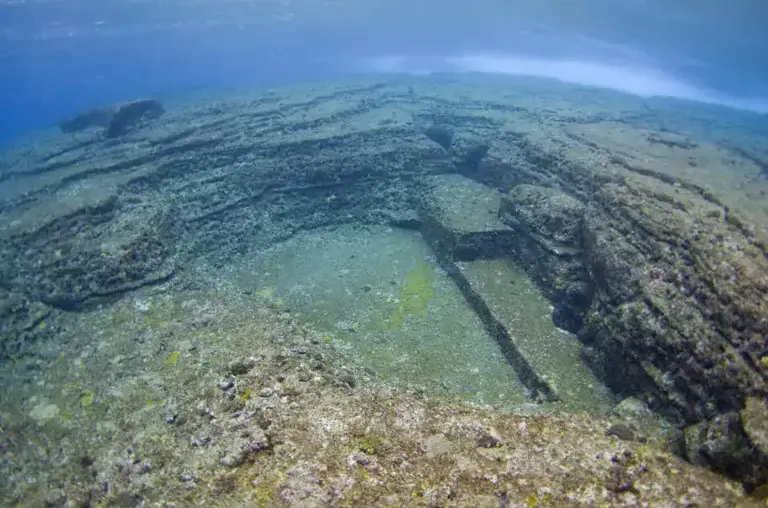
What do you think these ruins are? The result of natural formation? Or evidence that a once highly sophisticated civilization existed in the area?
 Megalithic Sites
The Sunken City of Pavlopetri
Located off the coast of southern Laconia in Peloponnese between the Pavlopetri islet across the Elafonisos village and the Pounta coast, Greece, archaeologists now believe this ancient city dates bac
 Megalithic Sites
10 Facts About the Yonaguni Monument
The Yonaguni monument is a underwater formation that is located off the coast of Yonaguni, the southernmost of the Ryukyu Islands, in Japan. Man made or natural formation, that has been the debate for
 Megalithic Sites
Mysterious 'underwater wall' that encompasses the entire planet found on Google Earth
YouTube Video Here: https://www.youtube.com/embed/PzcSQmJvzqw?feature=oembed&enablejsapi=1 A mysterious video posted on YouTube claims there is a supermassive wall located beneath Earth's oceans,