

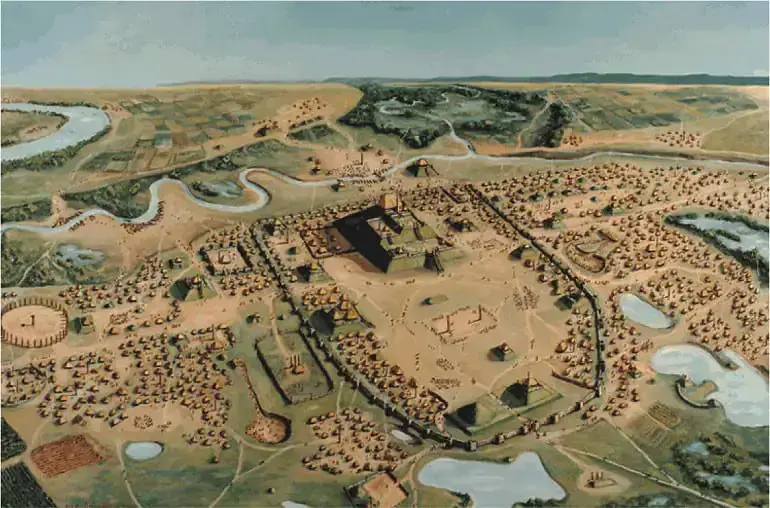
Cahokia is America's forgotten city and the largest and most complex ancient archaeological site located north of the Pre-Columbian cities of Mexico. It is perhaps the greatest ancient civilization fo
Cahokia is America's forgotten city and the largest and most complex ancient archaeological site located north of the Pre-Columbian cities of Mexico. It is perhaps the greatest ancient civilization found between the arid desert of Mexico and northern parts of the United States of America.
Archaeologists place Cahokia as one of the greatest and most influential settlements in the Mississippian culture that developed settlements of what is today known as the central and southeastern United States; five hundred years before Europeans came to the New Continent. The original name of this ancient city is unknown. The mounds that are located in the area were later named after the Cahokia tribe, the first people who lived in the region when the French explorers arrived in the seventeenth century.
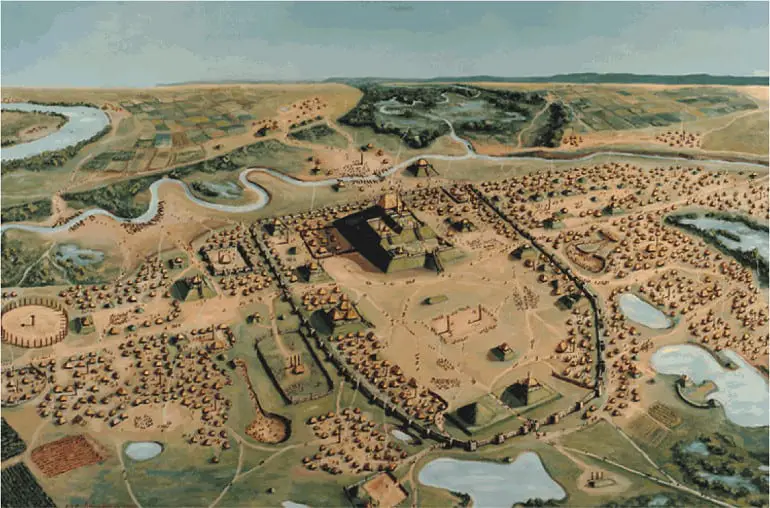
It is believed that the first human came to the region around 700 A.D. rising abundantly by 1050 A.D. becoming a very important site in the region. Archaeologists have found evidence that humans inhabited the region in the Late Archaic period (approximately 1200 BCE), even though researchers suggest that Cahokia came to be what it is today around 1200 CE during the Late Woodland period- a period which is considered a developmental stage without any massive changes in a short time but instead having a continuous development in stone and bone tools,leather crafting, textile manufacture, cultivation, and shelter construction.
Archaeologists note that the Cahokia tribe are not necessarily descendants of the original inhabitants of the Mississippi-era people; they suggest that different tribes settled in the area throughout the years; researchers also propose a connection with the Dhegihan Siouan-tribes with ancient Cahokia.
The society itself did not leave behind any written records; they did leave behind numerous artifacts made out of pottery shell, copper, wood and stone, but this ancient culture was very well planned constructing incredible mounds and burial sites that reveal how complex and sophisticated they were.
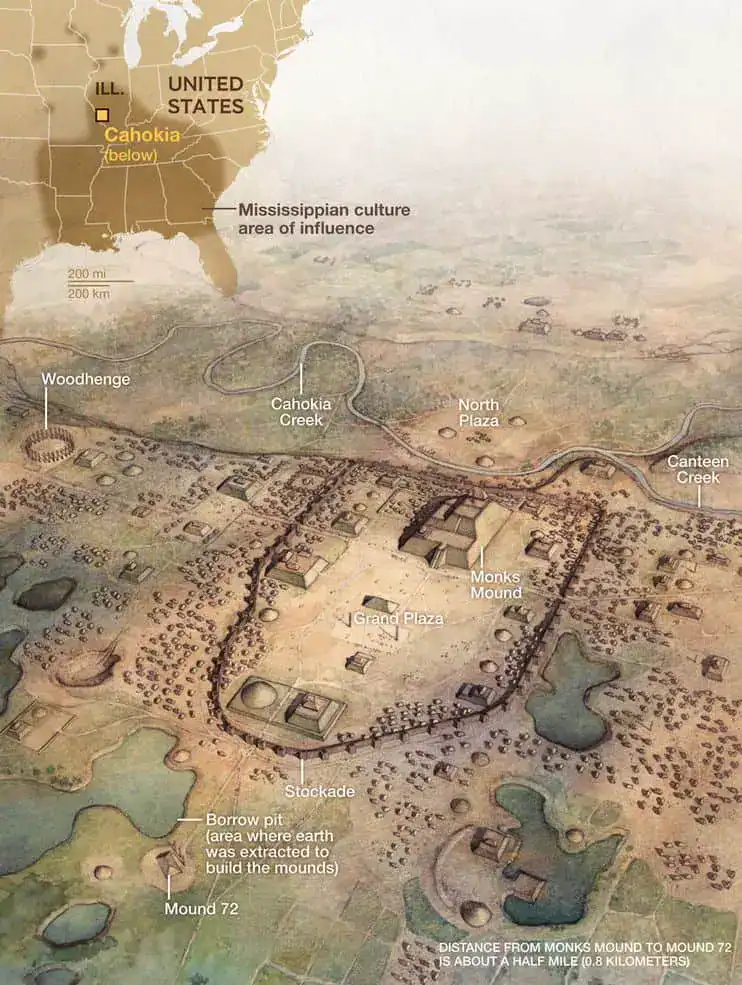 Image Above: NG STAFF. ART: GREG HARLIN. SOURCES: BILL ISEMINGER AND MARK ESAREY, CAHOKIA MOUNDS STATE HISTORIC SITE; JOHN KELLY, WASHINGTON UNIVERSITY IN ST. LOUIS
It is one of the largest archaeological sites in the United States of America covering around 3.5 square miles; containing around eighty mounds. Archaeologists believe the site was much larger in the past with over a hundred manmade structures; covering a size of six square miles.
Researchers believe that Cahokia was home to around fifteen thousand people although they estimate that the regional population was home to around forty-thousand people; researchers even believe that Cahokia could have been the worlds biggest metropolis of its time.
The center of the ancient city was the Monk's mound, the home of the city's ruling priest was located at the top of the mound in a temple that was made of wood.
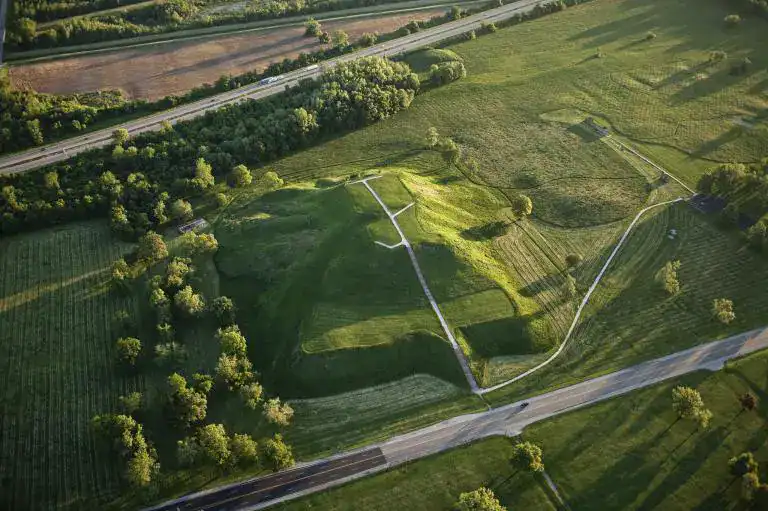 Cahokia Mounds State Historic Site holds the remnants of the largest and most influential city of the mound-building Mississippian culture. PHOTOGRAPH BY IRA BLOCK, NATIONAL GEOGRAPHIC
The social structure of ancient Cahokia was very similar to the rule of ancient Mayan society and/or the ancient Egyptian culture; a graded aristocracy and a proletariat of slaves.
The decline of Cahokia was very sudden, by 1300 the city was abandoned and the society declined completely; like many ancient cultures such as the Maya in the Yucatan region, archaeologists believe that the prevailing factors that contributed to the fall of Cahokia were overexploitation of their natural resources, the construction of the great mound, droughts and overpopulation. Very similar to the factors that caused the demise of the great Maya civilization.
 Megalithic Sites
Behold: Here Are 15 of the Greatest Ancient Cities in Human History
Some scholars argue that around the end of the last ice age, some 12 thousand years ago, our ancestors started building complex ancient cities around the globe. In terms of written history, there is e
 Megalithic Sites
Angkor: An Ancient Mega City Hidden Deep Withing the Jungle
Angkor, the ancient metropolis hidden deep inside the Cambodian Jungle is a city unlike any other. Covered in thousands of ancient temples, researchers have found that Angkor was the largest pre-indus
 Megalithic Sites
Here Are 11 Of The Oldest Cities Ever Built On Earth
When you think about the oldest settlements and cities on Earth, a few of us are aware of the fact that some of these cities date back to times before history was even written. (function(d, s, id) { i