
YouTube Video Here: https://www.youtube.com/embed/-MQ5dL9cQX0?feature=oembed&enablejsapi=1 When you hear the word "mummification," what comes to mind? For most of us, images from ancient Egypt com
YouTube Video Here: https://www.youtube.com/embed/-MQ5dL9cQX0?feature=oembed&enablejsapi=1
When you hear the word "mummification," what comes to mind?
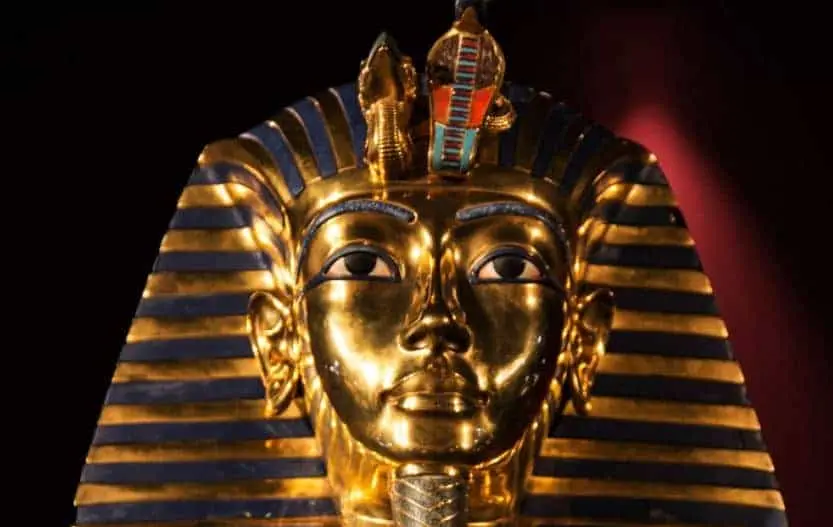
For most of us, images from ancient Egypt come to mind: The tomb of King Tut and the opulent golden death mask that was found when the tomb was unsealed in 1922.
[caption id="attachment_42966" align="aligncenter" width="1380"] The majestic gold death mask of King Tut (Via Pixabay)[/caption]
But it turns out that mummification has also been used by Christians over the centuries, usually to preserve the remains of saints, martyrs, or revered church figures such as popes.
The Pope That Exploded
Speaking of popes, let us consider the case of Pope Pius XII, whose body quite literally exploded in 1956.
Exploded? Yes.
Writing for Ozy, Dan Peleschuk explains this disgusting turn of events:
"It all started with a loud pop. Overpowered by the gases that had built up after a botched embalming — and further stewed by the Mediterranean heat — the corpse burst open inside the coffin like a firecracker as it rolled in a procession toward the Archbasilica of St. John Lateran in Rome. It was a less-than-dignified exit from the mortal realm, especially considering the unfortunate subject: Eugenio Pacelli, otherwise known as Pope Pius XII."
The image of a "firecracker" exploding inside of a coffin (when you consider that the firecracker was a human body) isn't one you're likely to forget anytime soon, but it's a fair description of what transpired.
[caption id="attachment_42967" align="alignnone" width="1046"] Pope Pius XII (Via Wikimedia Commons)[/caption]
It turns out that popes are still mummified according to New Kingdom Egyptian mummification techniques before being entombed, according to Ken Jeremiah, who has written an incredibly enlightening article on the Christian mummification for Ancient Origins. And he explains the need for such a process:
"If the bodies were not embalmed, autolysis and putrefaction would carry out their natural processes, and the bodies would rot. When autolysis occurs, internal acids destroy bodily tissues. Putrefaction causes the bodies to stink, the flesh to turn various shades before blackening, and eventually, the flesh pulls away and then disappears, revealing a skeleton alone. Untreated bodies are revolting and being around them could cause sicknesses. This is one of many reasons why Christians are typically mummified after death."
The Embalming of Jesus
The Bible partially explains how the body of Jesus was preserved after his crucifixion and burial. First of all, spices were applied to the corpse and then the body was wrapped in linen. But the possibility remains that Jesus was mummified in a sense:
"75 pounds of aloe and myrrh is excessive for superficial embalming, and it is therefore possible that his mummification was more elaborate. His followers considered him important, so this is probable, and Egyptian religious ideas and ceremonies were popular at the time. Many of their customs were adopted into the new faith, which came to be known as Christianity, and mummification techniques were but one of them."
[caption id="attachment_42968" align="aligncenter" width="521"]
 Embalming of Jesus Christ (Via Wikimedia Commons)[/caption]
All of this brings us to another subject which is key to the very foundations of Christianity: Incorruptibility. The New York Post did an extensive investigation of how the Vatican has made every effort to mummify saints in order to reinforce the notion of incorruptibility:
"The Catholic belief of 'incorruptibility' holds that if a body does not decay after death, the person is holy. It takes two miracles to become a saint; the Church once allowed a perfect corpse to count as one."Incorruptibility is no longer a miracle, however, perhaps because so many tried to help God along. Oil and herbs were inserted into the muscle cavities of some older popes, for instance."
Of course, bodies do decay, regardless of how holy a person may have been in their lifetime. And efforts to prevent that from happening were employed in the case of Pope John XXIII:
"After the pope’s internal organs were removed and analyzed, the body was placed in a stainless-steel tub for several weeks in a solution of formalin and alcohol, then neutralized for several weeks."His body then undertook a series of baths in assorted solutions for months at a time, including various mixtures of ethanol, methanol, phenol, camphor, nitrobenzene, turpentine and benzoic acid.
"Finally the body was bandaged in linen cloths saturated with a solution of mercury bichloride and ethanol. Then a second team ensconced him with wax on his face and hands. The entire process took about a year."
[caption id="attachment_42969" align="aligncenter" width="1024"]
 Pope John XXIII (Via Flickr)[/caption]
While the preservation of Pope John XXIII was successful, some of those who had done the job later died of cancer:
"Shockingly, there is only one survivor from the original team, the others having died of various tumors and cancers, likely side effects of the toxic chemicals expended during their work. Nobody is currently willing to assume their task due to the peril."
The goal of embalming or mummification is to give a natural appearance to the body, especially if it's to be displayed. And while the ancient Egyptians may have been the first to prefect the process, it remains a feature of how we treat the dead to this day.
Featured Image Via Flickr
 Biblical Mysteries
Archaeologists discover Biblical city of Libnah
YouTube Video Here: https://www.youtube.com/embed/VUY_S-J2ZJ8?feature=oembed&enablejsapi=1 A team of archaeologists has discovered the ruins of an ancient and important biblical city Since 2009, r
 Biblical Mysteries
The hidden messages of Michelangelo in the Sistine Chapel
The recently published Book by restaurateur Silvio Goren, has raised dozens of questions about the work of Michelangelo in the Sistine Chapel with assumptions of hidden messages inside the Sistine Cha
 Biblical Mysteries
Three secrets revealed to three children by an apparition in a field in Fátima, Portugal
YouTube Video Here: https://www.youtube.com/embed/B87xCz5bQVU?feature=oembed&enablejsapi=1 This story is part 2 of a 2-part series about the "Miracle of the Sun" in Fátima, Portugal. In the first