

Like many others before and after him, the first emperor of unified China, Qin Shi Huang, wanted to live forever. According to a set of recently discovered ancient texts, 2,200 years ago, the emperor
Like many others before and after him, the first emperor of unified China, Qin Shi Huang, wanted to live forever.
According to a set of recently discovered ancient texts, 2,200 years ago, the emperor issued an administrative order to seek for a potion that could grant him eternal life, reports the Xinhua news agency.
Qin Shi Huang was born in 259 BC, and by the time of his death, in 210 BC, he had conquered the six disputed kingdoms of China and managed to create a unified nation of which, obviously, he was proclaimed emperor.
As noted by scholars, during the reign of Qui Shi Huang, bamboo strips were a common writing material.
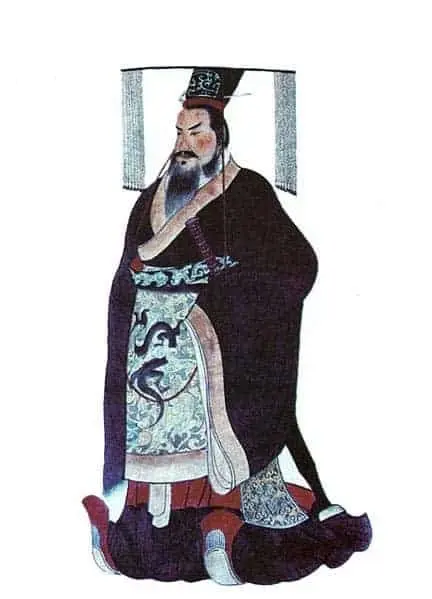
 Qin Shi Huang. Image Credit.

In 2002, more than 36,000 of bamboo strips containing ancient calligraphy were discovered in an abandoned well in the central Chinese province of Hunan.
The discovery was of great importance and historical value.
Zhang Chunlong, a researcher from the Hunan Institute of Archeology, analyzed 48 of these strips and discovered among them, a decree where the emperor ordered a search for potions that would grant him eternal life.
Experts note that; "It required an extremely efficient administration and a considerable enforcement to pass such a decree in ancient times when transport and communication were extremely underdeveloped."
Scholars explain that the search for the Emperor's elixir of life reached the borders of the empire.
The bamboo strips offer evidence of the unusual order and various details.
The ancient documents mention a town called "Duxiang" where "no miraculous remedy had been found," but it implied that "searches were continuing."
Another locality, referred to as Langya, in the present province of Shandong "alluded to a plant harvested in a sacred mountain" that might have been what the emperor was searching for.
Before the discovery of the Bamboo stripes, scholars already had an idea of Qin Shi Huang's obsession with immortality.
According to Chemistry World, the emperor thought that consuming cinnabar, composed of 85% mercury and 15% sulfur, would prolong his life.
 The famous Terracotta army. Image Credit: Shutterstock.
Ironically, and as expected, it did the opposite killing him at the age of 49.
Despite the fact that, the emperor did not discover the elixir of life, he equipped himself extraordinarily well for the afterlife: he was the emperor who had the underground mausoleum of Xian built in the north of the country, with 8,000 Terracotta warriors whose mission was to protect him in the afterlife.
His eternal resting place was a supermassive subterranean mausoleum that has never been excavated by experts.
Ancient records suggest that the underground palace has a roof that imitates the starry night with pearls and diamonds like stars and rivers of mercury.
 Mythology & Ancient Knowledge
Ponce de Leon's enemies linked him to 'Fountain of Youth' myth, inadvertently making him immortal
Juan Ponce de Leon is probably best known for discovering what is now known as the U.S. state of Florida, but he's also associated with a search for the so-called "Fountain of Youth" which would suppo
 Mythology & Ancient Knowledge
The Curious Case Of Immortal Putin
Have you come across these images before? It's not the first time that a conspiracy theory claims that a world leader is either a time traveler or immortal. This time it seems that the internet has ta
 Mythology & Ancient Knowledge
These are the 5 ancient Tibetan Rites—the elixir of life and secret of the fountain of youth
The Five ancient Tibetan Rites allowed a Chinese man named Li Ching Yuen to prolong his life and live for 256 years. The human body is way more complicated than you've probably ever imagined. Above ou