
In Brief: "The Pushpaka Vimana that resembles the Sun and belongs to my brother was brought by the powerful Ravana; that aerial and excellent Vimana going everywhere at will ... that chariot resemblin
In Brief: "The Pushpaka Vimana that resembles the Sun and belongs to my brother was brought by the powerful Ravana; that aerial and excellent Vimana going everywhere at will ... that chariot resembling a bright cloud in the sky ... and the King [Rama] got in, and the excellent chariot at the command of the Raghira, rose up into the higher atmosphere.'"
Hindu mythology is filled with incredible tales, stories mythologies and most importantly written texts.
In previous articles, we covered the Mahabharata and the countless powerful weapons described in it.
According to Ancient Hindu history –one of the most extensive on the planet– their ancient sacred texts called the ‘Vedas’ speak of incredible flying ships that visited our planet over 6000 years ago.
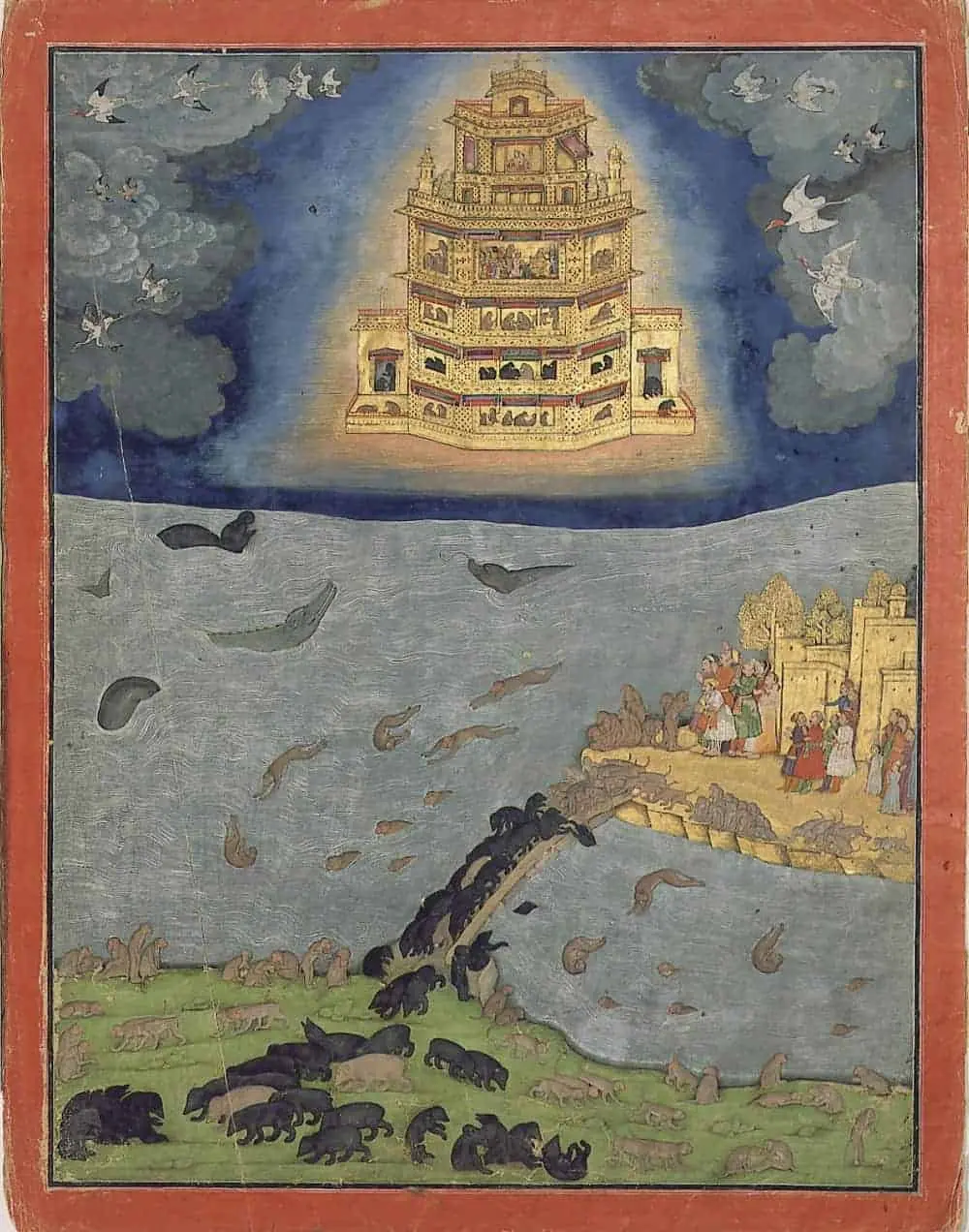
 The Pushpaka vimana flying in the sky. Image Credit: Wikimedia Commons. Public Domain
.jpg)
In this article, we take a look at the Vimana, more specifically, the ancient Pushpaka Vimana, a powerful ancient flying vehicle described in Hindu texts and Sanskrit epics.
The Pushpaka Vimana of king Ravana (who captured the Vimana from Lord Kubera; and Rama returned it to Kubera) is the most quoted example of a vimana.
Vimanas are also mentioned in Jain texts—Jainism, an ancient Indian religion.
If we take a look at ancient Sanskrit and the etymology of the Vimana, we will find that it means "measuring out, traversing" or "having been measured out".
Reference to the ancient Vimana can be found in the Mahabharata, which is one of the two major Sanskrit epics of ancient India:
“At Rama`s behest, the magnificent chariot rose up to a mountain of cloud with a tremendous din. Another passage reads: Bhima flew with his Vimana on an enormous ray which was as brilliant as the sun and made a noise like the thunder of a storm.
Author Monier Monier-Williams—the second Boden Professor of Sanskrit at Oxford University describes the Ancient Vimana as "a car or a chariot of the gods, any self-moving aerial car sometimes serving as a seat or throne, sometimes self-moving and carrying its occupant through the air; other descriptions make the Vimana more like a house or palace, and one kind is said to be seven stories high," quoting the Pushpaka Vimana as one of the most worthy examples.
In modern languages, Vimana is usually translated to aircraft.
In many depictions of Vimana, we see these powerful, alleged machines, depicted as being as big as a temple.
 Sculpture of the Pushpaka Vimana, as a temple flying in the sky. Image Credit: Wikimedia Commons.CC BY-SA 4.0
The Vimana predecessor
In ancient Sanskrit Epics, the Vimana were the so-called flying chariots used by a number of different ancient Gods.
Various Vedic deities are described as using, flying, wheeled chariots to move from one place to another.
Some verses of ancient texts have been interpreted by different authors as evidence of ‘mechanical birds’.
In the Rigveda (an ancient Indian collection of Vedic Sanskrit hymns), for example, we find the following description:
"Dark the descent: the birds are golden-coloured; up to the heaven they fly robed in the waters. Again, descend they from the seat of Order, and all the earth is moistened with their fatness. Twelve are the fellies, and the wheel is single; three are the naves. What man hath understood it? Therein are set together spokes three hundred and sixty, which in nowise can be loosened."—The Hymns of the Rigveda by Ralph Thomas Hotchkin Griffith.
According to Swami Dayananda Saraswati— a renowned scholar of the Vedic lore and Sanskrit language—the ancient Vimana were powerful spacecraft:
"jumping into space speedily with a craft using fire and water ... containing twelve stamghas (pillars), one wheel, three machines, 300 pivots, and 60 instruments."—A critical study of the work “vymanika shastra”.
The Pushpaka Vimana
The Pushpaka Vimana is usually described as a mythological flying palace or chariot.
In the Ramayana, we find another extraordinary description of the Vimana, more specifically the Pushpaka Vimana:
"The Pushpaka Vimana that resembles the Sun and belongs to my brother was brought by the powerful Ravana; that aerial and excellent Vimana going everywhere at will ... that chariot resembling a bright cloud in the sky ... and the King [Rama] got in, and the excellent chariot at the command of the Raghira, rose up into the higher atmosphere.'"
The Pushpaka Vimana appears as the first flying vimana mentioned in existing Hindu texts. The powerful Pushpaka Vimana was built e by Vishwakarma for Brahma, the Hindu god of creation. This Vimana was later given by Brahma to Kubera, the God of wealth. Eventually, the Pushpaka Vimana was stolen, along with Lanka, by his half-brother, king Ravana.
Featured Image Credit: Leon Tukker
 Ancient Astronauts
The Brahmashirsha Astra and the Brahmastra—Descriptions of Ancient Nuclear Weapons?
While there are countless weapons mentioned in Hindu mythology and the Mahabharata , two (better said three) specific weapons caught my attention mostly because of their ancient descriptions, and what
 Ancient Astronauts
The Bible, Flying Machines, And How Enoch And Prophet Elijah Were 'Taken To The Heavens'
When you read texts written thousands of years ago and find them mentioning flying chariots, fire, smoke, and mysterious beings, you can't help and wonder whether or not the ancients were actually spe
 Ancient Astronauts
The Kebra Nagast—King Solomon And The Mystery of Flying Carpets
In Brief: Flying carpets are mentioned in a number of legends. For example, it is said that King Solomon possessed a flying carpet sixty miles long and sixty miles wide, capable of transporting 40,000