
A pyramid is a structure whose outer surfaces are triangular and converge to a single point at the top, making the shape roughly a pyramid in the geometric sense. For thousands of years, civilizations
A pyramid is a structure whose outer surfaces are triangular and converge to a single point at the top, making the shape roughly a pyramid in the geometric sense. For thousands of years, civilizations across the globe have used this architectural design for tombs, fortresses, and temples.
Compelling studies suggest that many of these pyramids were aligned with astronomical events, such as solstices, eclipses, and even the Earths own hemispheres.
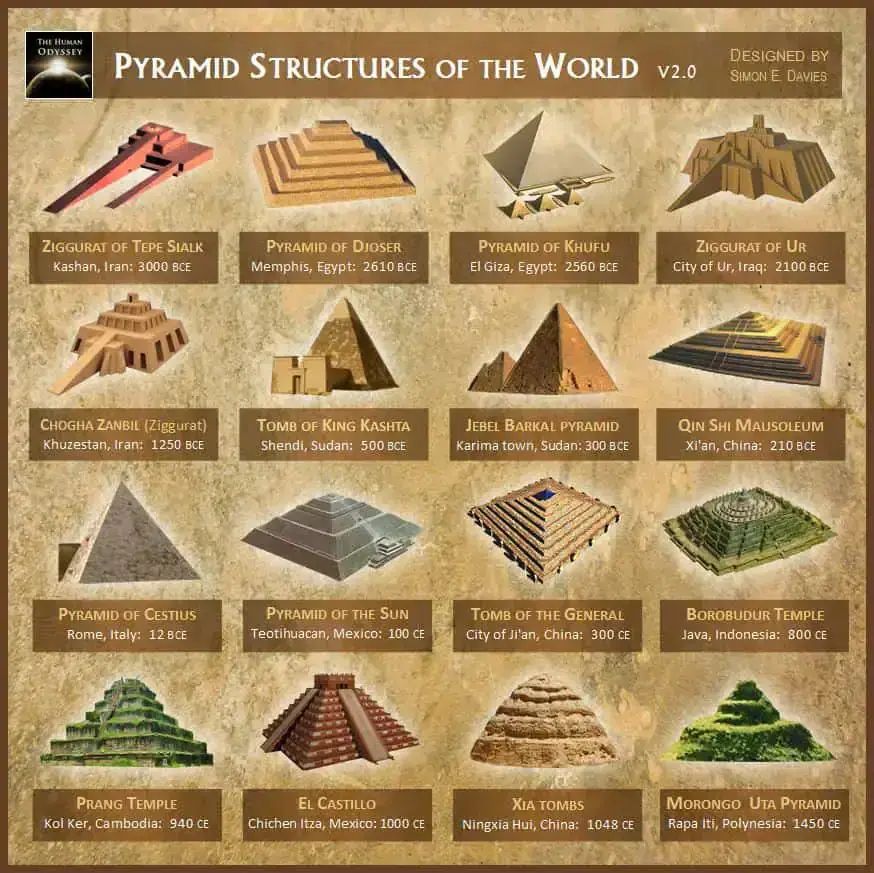
The Mesopotamians built the earliest pyramid structures known as ziggurats (e.g. Tepe Sialk and the Ziggurat of Ur). In ancient times they were painted in gold & bronze, endowing them with a luminous quality. The ziggurats were believed to be dwelling places for the gods, and each city had its own patron deity which ruled over the sea, sky, earth etc.
In Egypt, the pyramids were huge structures built of brick or stone. The sun god Ra, considered the father of all pharaohs, was said to have created himself from a pyramid-shaped mound known as a ‘Benben’ before creating all other gods. They were often coated with white limestone in order to give them a shining appearance (as a reference to the rays of the sun god).
The Nubian pyramids from Sudan served as tombs for the kings and queens of Jebel Barkal and Meroë. These Nubian Pyramids have different characteristics to their Egyptian counterparts, constructed at much steeper angles. These great tombs were still being built in Sudan as late as 300 CE.
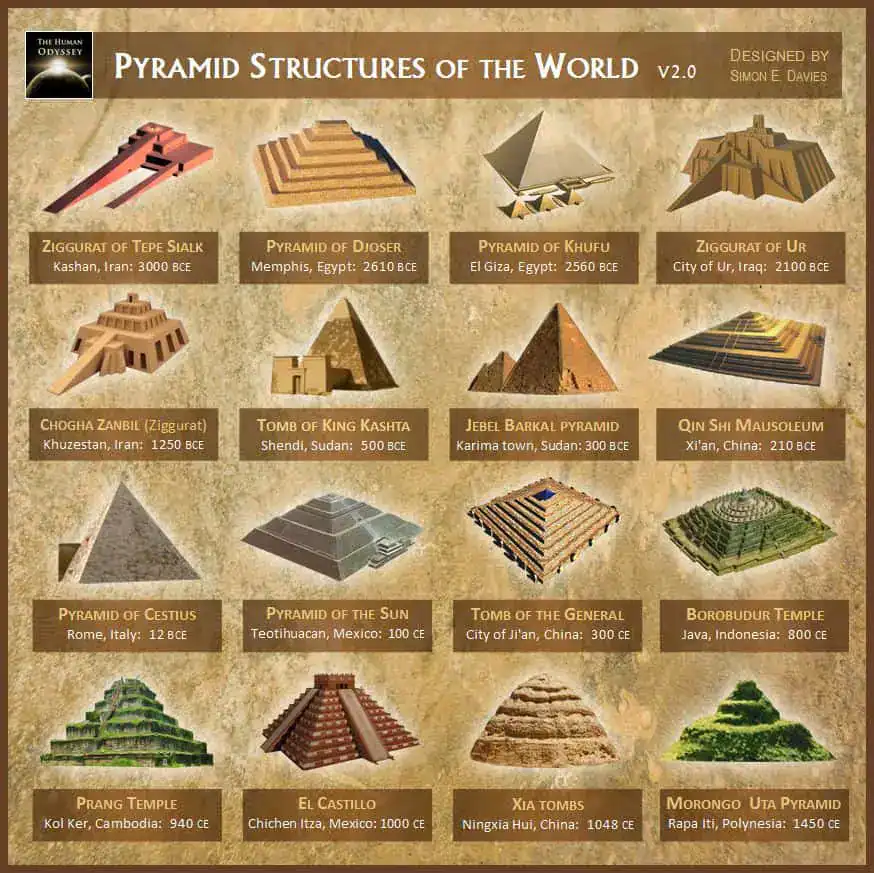 Illustration by Simon E. Davies.
Far to the East, there were many flat-topped like pyramids built in China & Korea between 188 BCE and 675 CE. These huge mausoleums were built for the early emperors of China and their relatives. The ancient Chinese believed that when an emperor died, their soul entered the afterlife, so the mausoleums were constructed as heavenly palaces for their life hereafter.
All of the daily comforts of their past life such as servants, attendants, possessions, pets, wives, guardians, concubines, food and drink were to be provided for them in the after life. This was accomplished by burying all of these things with the deceased when they died. It was not uncommon to kill people in order to be buried with their master, but as dynasties evolved clay replicas replaced the real thing.
The Indonesia culture also featured pyramid structures such as Borobudur temple and Prang temple. These step pyramids were based on the native beliefs that mountains and high places are the abode for the spirit of the ancestors.
Across the Pacific Ocean, a number of Mesoamerican cultures also built pyramid-shaped structures. They were typically stepped, with temples on top (similar to the ziggurats of Mesopotamia). These temples were often used as places of human sacrifice. The 'Pyramid of the Sun' in Teotihuacán means “the place where men become Gods.” They claim that their pyramids were instruments for transforming the soul after death, just as the Egyptians did.
A recent series of pyramid-like structures were built by the Polynesians known as Pā (sacred hill forts). These stepped structures were carved from hill tops, forming a pyramid-like shape, and were often used as defensive settlements. The Polynesians believed these earth works were endowed with ‘mana’, a spiritual energy that granted them power and authority.
The common theme which links all these pyramid structures is death, authority, and immortality. These temples literally seemed to deify their occupants, who went on to rule from the heavens, their legacy secured and memorialized by the wondrous monuments of the ancients.
This article was written by Simon E. Davies. Contributor at Ancient-Code.com
 Pyramids of the World
Researchers confirm: The Largest Pyramid in Mexico has been found
Researchers discover immense pyramid in Mexico, larger than Teotihuacan's Pyramid of the Sun. Researchers in Mexico have discovered a Pyramid that, according to initial measurements, is larger than th
 Pyramids of the World
The Worlds Largest Pyramid; In China?
The largest pyramid in the world is located in China and makes The Great Pyramid of Giza look like a miniature piece? [caption id="attachment_10071" align="aligncenter" width="610"] Photograph publish
 Pyramids of the World
The Secret Pyramid In North Dakota You Probably Never Heard Of
YouTube Video Here: https://www.youtube.com/embed/-UUbMWf-uZI?feature=oembed&enablejsapi=1 This is the Pyramid you probably never heard of and it is located in Cavalier County, North Dakota, repre