

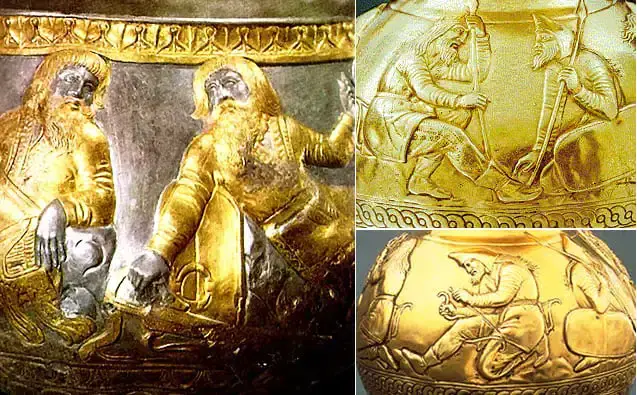
Archaeologists have uncovered two 2,400-year-old pure gold 'bongs' that were used by Aryan tribal chiefs to smoke cannabis during ceremonies. The historic drug paraphernalia was found alongside 7lbs o
Archaeologists have uncovered two 2,400-year-old pure gold 'bongs' that were used by Aryan tribal chiefs to smoke cannabis during ceremonies. The historic drug paraphernalia was found alongside 7lbs of other gold items when an area of land was dug up in Russia to make way for power lines. The items had been buried in a stone chamber before being concealed by a thick layer of clay.
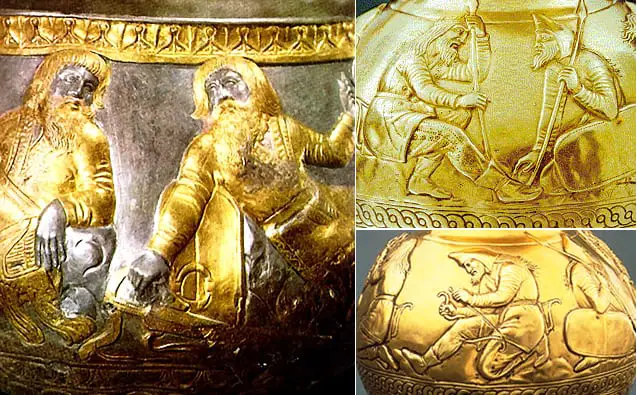
Criminologists have since carried out tests which indicate that the thick, black residue found inside the vessels comes from the cannabis and opium which the tribal royal smoked. Experts believe the items belonged to the Scythians, a nomadic warrior race who ruled large swathes of Europe and Asia between the 9th century BC and the 4th century AD.
It means the so-called bongs could be some of the oldest in existence. Several historians say the Scythians smoked, and sometimes brewed, a strong concoction of cannabis and opium in order to alter their state of mind before heading into battle.

The famed Greek historian Herodotus, who died in 425BC, wrote: ‘Scythians used a plant to produce smoke that no Grecian vapor-bath can surpass which made them shout aloud.’ The dig also led to the discovery of golden cups, rings, and neck rings. All the items have since been cleaned and put on display in a Russian museum. Antonn Gass, from the Prussian Cultural Heritage Foundation, in Berlin said: ‘These are among the finest objects we know from the region.’
 Archaeology & History
German Cave Reveals Clues About the First Domesticated Wolves
YouTube Video Here: https://www.youtube.com/embed/16SySpAWDpQ?start=4&feature=oembed Scientists have found new important clues about the first domesticated wolves and dogs. A small cave in Germany
 Archaeology & History
Is There a Connection Between Petroglyphs in Georgia and Bronze Age Europe?
Petroglyphs found in Georgia show a possible connection between some of the earliest archaeological sites in the United States and Bronze Age Europe. Symbols found etched into stone are remarkably sim
 Archaeology & History
World's oldest chess piece could be a rook dating back to the 7th century
YouTube Video Here: https://www.youtube.com/embed/n_Zv2Z8Tha0?feature=oembed&enablejsapi=1 The game of chess has been around for a very long time, both fascinating and frustrating players of every