

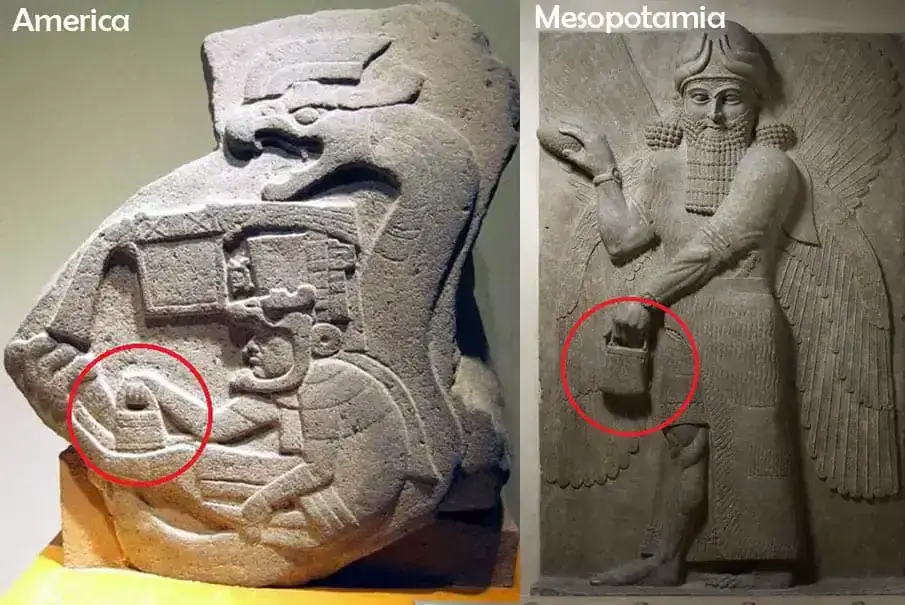
How is it possible that thousand-year-old depictions of the Anunnaki show the gods carrying a mysterious bag, and halfway around the world we find the same thing depicted by ancient Mesoamerican civil
How is it possible that thousand-year-old depictions of the Anunnaki show the gods carrying a mysterious bag, and halfway around the world we find the same thing depicted by ancient Mesoamerican civilizations? Depicted by the ancient Sumerian representations of the Anunnaki, the mysterious 'handbag' of the Gods is seen in several cultures in America and Göbekli Tepe. Coincidence?
Compelling evidence—found in the last couple of decades—has proven mankind is a species with amnesia. The countless discoveries made all across the globe has forced us to question everything about the origin of mankind, ancient cultures and history in general.
Slowly and piece by piece, we have been exploring and gathering small pieces of a MASSIVE puzzle that have driven us in the right direction when searching for answers mainstream scholars have not been able to fully answer.
How can you explain the countless similarities among civilizations that inhabited Earth thousands of years ago, which were separated by tens of thousands of kilometers?
Why did nearly all ancient cultures on Earth decide to build Pyramids? And why are so many pyramids eerily similar?
It's as if nearly all ancient civilizations followed the same blueprint. It's as if somehow, ancient cultures were interconnected thousands of years ago.
One of the most interesting and mind-boggling enigmas can be traced back to Ancient Mesopotamia—comonly referred to as the Cradle of Civilization—where a mysterious motif has driven many authors to question history as we have been taught.
The ancient Sumerians depicted the Ancient Anunnaki with curious items. Two of the most interesting objects seen in the ancient Sumerian deities were the 'hand watch' seen on nearly all depictions, and the mysterious 'bag' carried by the Gods.
Curiously, if we travel thousands of kilometers around the globe from Mesopotamia to the Americas, we will find that the ancient Maya, Aztecs and other ancient civilizations utilized the same motif when depicting their deities.
Furthermore, if ew travel to Egypt we will see that the Ankh symbol was also carried around by the gods just as the mystery handbag in ancient Mesopotamia and the Americas.
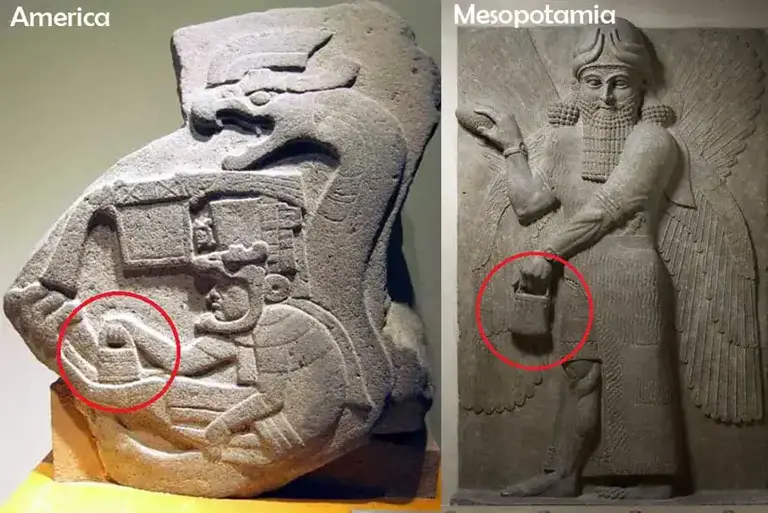
Why is it that ancient civilizations in America, Egypt, and ancient Mesopotamia depicted their deities carrying a mysterious object in their hand? Is it possible that all ancient cultures in America, Egypt and Mesopotamia were visited by the same 'Gods'?
Interestingly, the Ancient Anunnaki were nearly always represented in a humanoid form, even though numerous traits indicate clear differences between the Anunnaki and ordinary humans, the facial features of the Ancient Anunnaki Gods were always well-hidden thanks to the large beards.
Just as the ancient Sumerians depicted their deities in a humanoid form, the Ancient Egyptians and different cultures in the Americas did the same thing.
The obvious question here is why? Why did ancient cultures—separated thousands of kilometers from each other—depict their deities in a nearly identical way? Furthermore, how is it even possible that the Ancient Sumerians depicted their gods carrying a mysterious bag, and that people halfway across the world did the same thing?
At the archeological site of La Venta, we will find a stone stele depicting the ancient Mesoamerican God Quetzalcoatl, who is curiously holding in his hand the same ‘Bag’ we see in ancient Sumerian depictions.
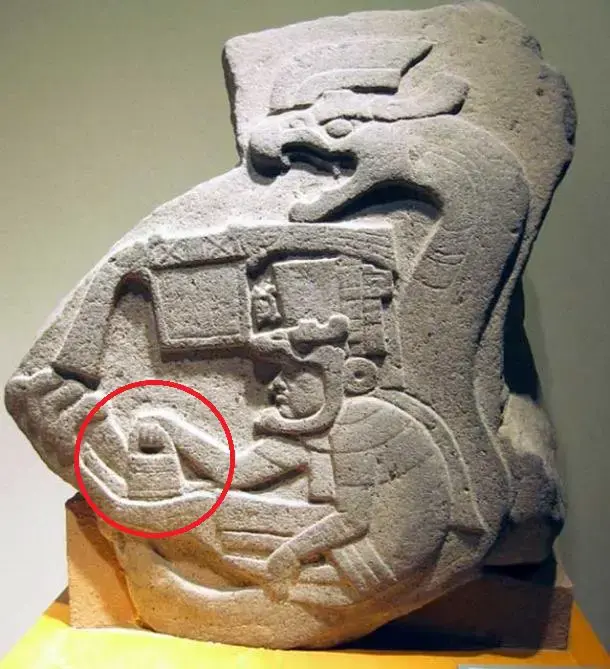
But this isn’t the only site in Mexico where the curious representation was found.
If we travel to Tula—an important regional center which reached its height as the capital of the Toltec Empire between the fall of Teotihuacan and the rise of Tenochtitlan—we will find their massive ‘Atlantean’ statues, and if we observe closely, we will notice that once again the mysterious handbag is present.
 Toltec temple ruins in Tula, Mexico Credit: Pinterest
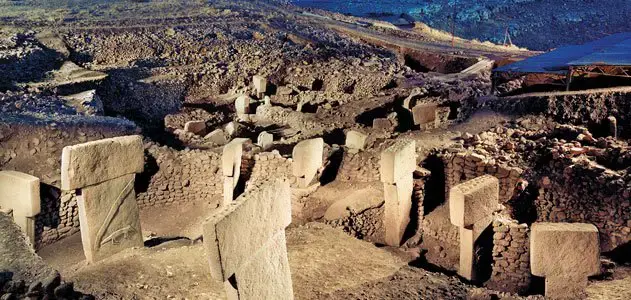
If we travel to Göbekli Tepe, located on a remote hilltop in southern Turkey we will find the same THING.
Göbekli Tepe is one of the oldest (if not oldest) ancient megalithic temples on our planet. There, intricate massive stone pillars arranged into a set of rings stand tall and proud telling a millennia-old story when different civilizations ruled the over the planet. The massive stones were believed to have been carved by Neolithic hunter-gatherers some 12,000 years ago, even though recent evidence points towards the fact that
The mysterious temple, which consists of three huge stone circles was deliberately buried for an unknown reason in the distant past. After 13 years of digging, archaeologists investigating the ancient site have failed to recover a single stone-cutting tool. No one has been able to understand how ancient mankind, which was believed to be incapable of such feasts, erected some of the greatest stone-works on the planet.
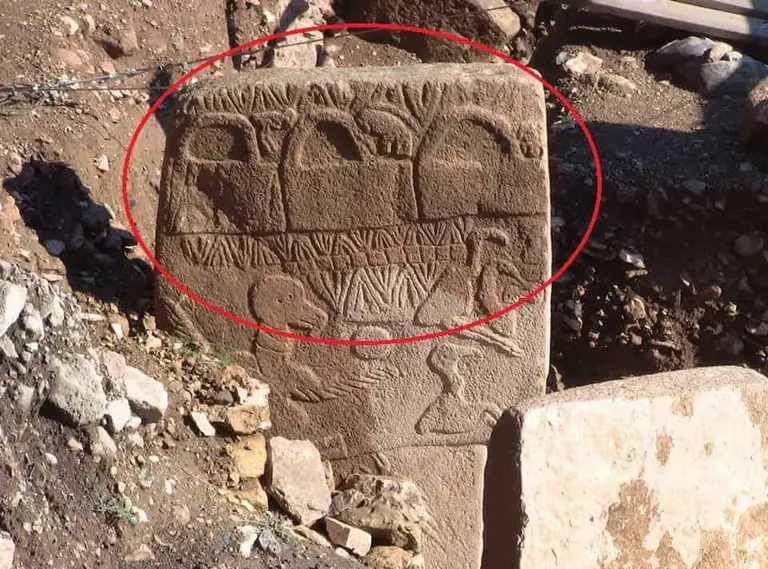
Does the presence of the mysterious bag, carried by the gods, indicate that these two cultures connected in a mysterious way?
Why did ancient cultures depict their Gods carrying the mysterious handbag? What was inside it?
And most importantly, how is it even possible that the mysterious handbag is present in different civilizations around the globe—which according to mainstream scholars were never connected?
What if the Ancient Anunnaki—depicted by the Ancient Sumerians—and the Gods who visited the ancient Maya, Aztec, Toltec and Olmec civilizations are in fact the SAME?
What do you think this mysterious bag is meant to represent? Do you think it is just a coincidence that these three sites—and there are more—feature all the same thing? What could have been carried by the 'Gods' that was so important that nearly all ancient cultures had to illustrate it?
 Megalithic Sites
Göbekli Tepe is at least 7000 years older than Stonehenge
Today, Göbekli Tepe is a vast, dusty hill. The heat prevents archaeologists from digging in the summer and therefore only 5% of the total of Göbekli Tepe has been excavated. Just imagine everything th
 Megalithic Sites
12,000 Years Ago, A Mysterious Culture Built The First Temple On Earth
Located 2,500 feet above sea level at the top of a mountain ridge in the Southeastern Anatolia Region of Turkey, some 15 kilometers (9 mi) northeast of the town of Şanlıurfa lie the breathtaking ruins
 Megalithic Sites
20 facts about Göbekli Tepe: A 12,000-year-old ancient wonder
It is believed that the “Göbekli” people were organized groups of hundreds of hunters that guided whole herds of gazelles into traps. These people built a monument believed to be around 6,500 years ol